
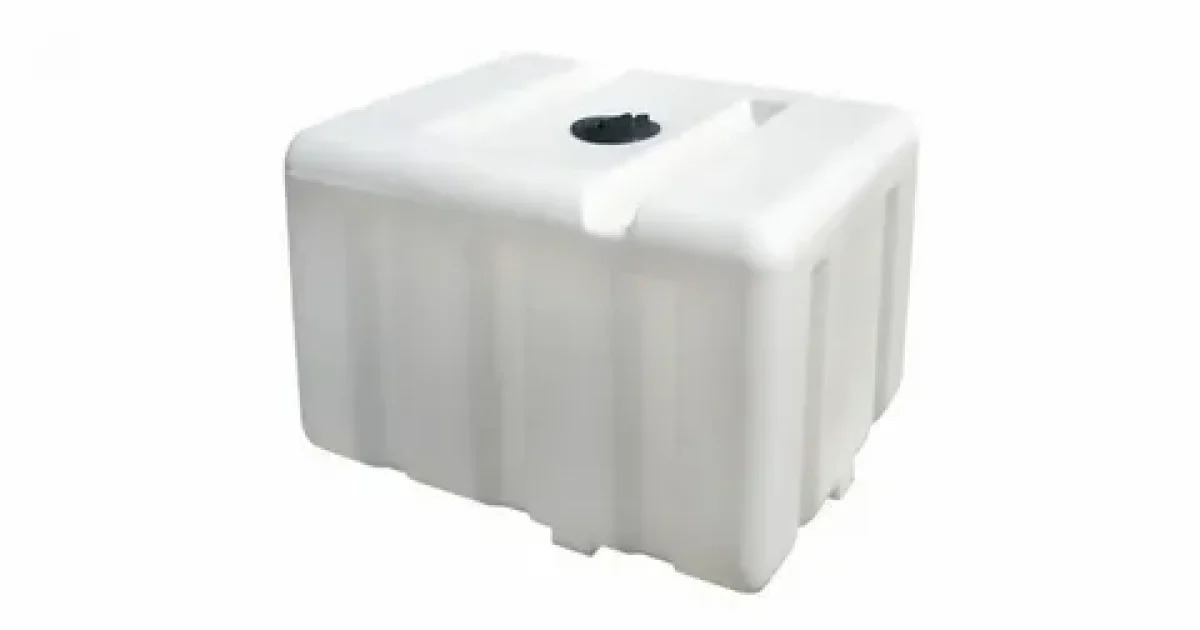
Looking for small water tanks NZ? A compact rainwater tank can be a practical solution for New Zealand homes, gardens, and smaller sections with limited space.
The right tank depends on what you want to use the water for, how much roof area you have available for rainwater collection, your local climate, and the space available for installation. Options range from small rain barrels for garden watering to slimline water tanks designed for narrow urban sections.
New Zealand’s Building Performance guidance confirms that you can collect rainwater for gardens, toilet flushing, laundry, and other household uses. If rainwater is intended for drinking, bathing, or kitchen use, it needs appropriate treatment or purification.
Small water tanks are compact water storage systems designed to collect and store rainwater without requiring the footprint of a large household or rural tank.
There is no single official capacity that defines a “small” tank. In the NZ market, small tanks can range from a few hundred litres through to around 5,000 litres, depending on the manufacturer and design.
For example, current NZ suppliers offer compact tanks starting at around 120 litres, while slimline options commonly extend from approximately 1,000 litres to 5,000 litres.
The important question isn’t simply “How many liters do I need?”
It is:
What do I want to use the stored water for, and how much space do I have?
A small rainwater tank NZ homeowners can install has several practical applications.
For a small garden, you may not need a large storage system.
Building Performance states that a rain barrel of around 240 litres can be suitable for garden watering, while rainwater tanks of 500 litres or more can provide greater storage.
Collected rainwater can be used for:
A basic outdoor system may also work using gravity rather than a pump.
Many NZ homes have limited outdoor space, particularly in urban areas.
This is where slimline water tanks NZ can be useful.
Their narrow profile allows them to be positioned alongside a house, garage, fence or other suitable area where a traditional round tank may not fit.
Current NZ products include slimline tanks specifically designed for narrow residential sections and urban properties.
Rainwater can also be used for applications such as toilet flushing and laundry.
However, connecting a rainwater tank to household plumbing is more complex than installing a tank for garden use. Building Performance advises that a rainwater system connected to a home that also has mains water requires building consent, mains-water isolation and backflow prevention.
Choosing the right water tank size NZ homeowners need starts with your intended use.
| Tank capacity | Common application |
|---|---|
| 200–300L | Small gardens and pot plants |
| 500–1,000L | Garden watering and outdoor use |
| 1,000–2,000L | Larger gardens and compact residential storage |
| 2,000–3,000L | Rainwater reuse and urban water storage |
| 4,000–5,000L | Greater household or rainwater storage |
These are practical categories rather than universal rules.
Building Performance recommends considering your local rainfall, intended water use, available mains supply, property size and roof catchment area when choosing tank capacity.
A 500 litre water tank can be useful for a small garden or outdoor water storage.
It may not be sufficient if you have:
For a small garden, however, 500 litres can be a practical starting point.
The terms are sometimes used interchangeably, but they describe slightly different things.
A small water tank generally refers to its storage capacity.
A slimline water tank refers more specifically to its shape and footprint.
For example, a 2,000L or 3,000L slimline tank can provide substantial storage while taking up relatively little width.
This makes slimline designs particularly useful for:
Current NZ suppliers offer slimline tanks in capacities such as 1,000L, 2,000L, 3,000L, 4,000L and 5,000L.
A basic rainwater collection NZ system is relatively simple.
Rain falls onto the roof and flows through the gutters and downpipes. The water is then directed into the storage tank.
A typical system includes:
Building Performance recommends including a first-flush device, overflow outlet and access for cleaning when designing a rainwater system.
Yes, but untreated rainwater should not automatically be considered safe drinking water.
Rainwater collected from roofs can become contaminated by:
If the water will be used for drinking, bathing, kitchen use or other potable purposes, the system needs appropriate treatment or purification.
Building Performance specifically advises that rainwater used for drinking and other household applications must be treated or purified.
For garden watering, the requirements are considerably simpler.
Not always.
For basic garden watering, a gravity-fed system may be enough.
Building Performance notes that outdoor rainwater systems can generally operate without pumps when gravity provides sufficient flow.
A pump becomes more useful when you need:
If you’re buying a small water storage tank for simple garden use, don’t automatically assume that you need a pump.
Location is one of the most important decisions for small water tanks.
Before buying a tank, measure:
If your property has limited space, a slimline design may be more practical than a round tank.
Some current NZ slimline products are specifically designed to sit against walls or fences and make use of narrow urban spaces.
Remember that a full tank is extremely heavy.
One litre of water weighs approximately one kilogram, so even a 2,000L tank contains roughly 2,000kg of water.
This is why the tank base and installation method matter.
Common water tank materials NZ homeowners will encounter include:
Plastic or polyethylene tanks are widely available in different shapes and capacities.
They are relatively lightweight and can be suitable for urban properties where access is restricted.
Coated steel tanks are available in a range of shapes and sizes, including slimline designs.
They can be suitable where appearance, durability and available dimensions are important considerations.
Concrete tanks are strong and are commonly considered for larger or underground applications.
Building Performance identifies polyethylene, concrete and coated steel as common rainwater tank materials in New Zealand.
Yes. In fact, compact tanks can be particularly useful where outdoor space is limited.
Current NZ products are specifically marketed for urban sections, with slimline models designed to fit beside homes, garages and fences.
For an urban property, think about the complete system rather than the tank alone:
Tank + roof catchment + guttering + filtration + overflow + outlet + pump = usable rainwater system.
It depends on the installation.
Building Performance states that smaller garden-use tanks generally present fewer consent issues, while larger or elevated tanks may require consent. It also notes that connecting rainwater to household plumbing where mains water is present requires building consent and backflow protection.
Rules can also vary between councils.
Before installation, check the requirements that apply to your specific property, particularly if the tank is:
Don’t rely solely on what a tank supplier says is “consent-free”; confirm the requirements for your property.
Tank size should be considered alongside your roof catchment.
A larger roof can collect considerably more rainwater than a small roof during the same rainfall event.
A simple way to think about it is:
Roof catchment × rainfall × collection efficiency = potential harvested water
You also need to consider how much water your household or garden actually uses.
A large tank isn’t automatically better if your water demand and available roof catchment don’t justify it.
Good maintenance helps protect water quality and system performance.
Regularly check:
Keep the tank securely covered and prevent animals and debris from entering.
If the tank supplies drinking water, additional water-quality management is required.
More capacity isn’t always better.
Choose based on water demand, rainfall, roof catchment, and available space.
A 3,000L tank can contain approximately three tonnes of water.
The base must be appropriate for the installation.
Check the complete footprint, including pipework, fittings and maintenance access.
Every tank needs a suitable way to deal with excess water.
If you’re planning potable use, design the treatment system from the beginning.
This can create a backflow and cross-connection risk.
Use a qualified professional where household plumbing is involved.
Before purchasing, compare more than just the price.
Choose a capacity appropriate for your expected water use.
A tank that fits your garden may not fit through the access path.
Consider polyethylene, steel or concrete based on the application.
If the tank will store drinking water, check that the product and complete system are appropriate for potable use.
Some NZ manufacturers currently offer tanks certified to AS/NZS 4766, the relevant polyethylene storage tank standard.
Ask about:
A water tank is a long-term installation, so warranty conditions and replacement components are worth considering.
A simple starting point is:
Small garden: 200–500L
Average garden: 500–1,000L+
Limited urban space: 1,000–3,000L slimline
Greater rainwater storage: 3,000–5,000L+
Primary household rainwater supply: Usually substantially larger storage is required.
Building Performance notes that a 5,000L tank can provide a good proportion of indoor water use in areas with year-round rainfall, while properties in areas with dry summers may need substantially larger storage. If rainwater is the sole water source, its guidance indicates at least 30,000L may be required.
These figures should be treated as starting points rather than universal sizing rules.
The best small water tanks NZ solution depends on your property rather than simply choosing the tank with the largest capacity.
For a small garden, a 200–500L rain barrel or compact tank may be enough. For a larger garden, 500–1,000L or more may make sense. If you’re dealing with a narrow urban section, a slimline water tank NZ homeowners can install alongside a building may provide much more storage without taking up the footprint of a traditional round tank.
Before buying, consider your intended water use, roof catchment, available space, installation requirements, and local council rules.
A well-designed rainwater collection system can turn otherwise unused roof runoff into a useful source of water for your garden and, where appropriately designed and treated, household applications.
Small tanks and rain barrels are available from a few hundred litres, with some NZ manufacturers offering products below 500L. The appropriate capacity depends on the intended application.
It can be enough for a small garden with moderate water demand. Larger gardens or properties with extended dry periods may benefit from more storage.
A slimline tank is often worth considering because its narrow profile is designed for restricted spaces. Current NZ products are available in capacities from around 1,000L to 5,000L.
Yes. Rainwater can be used for toilet flushing when the system is correctly designed and installed. Additional plumbing and compliance requirements can apply when connecting it to a home with mains water.
Yes, but the water needs appropriate treatment or purification, and the collection/storage system needs to be designed and maintained for potable use.