
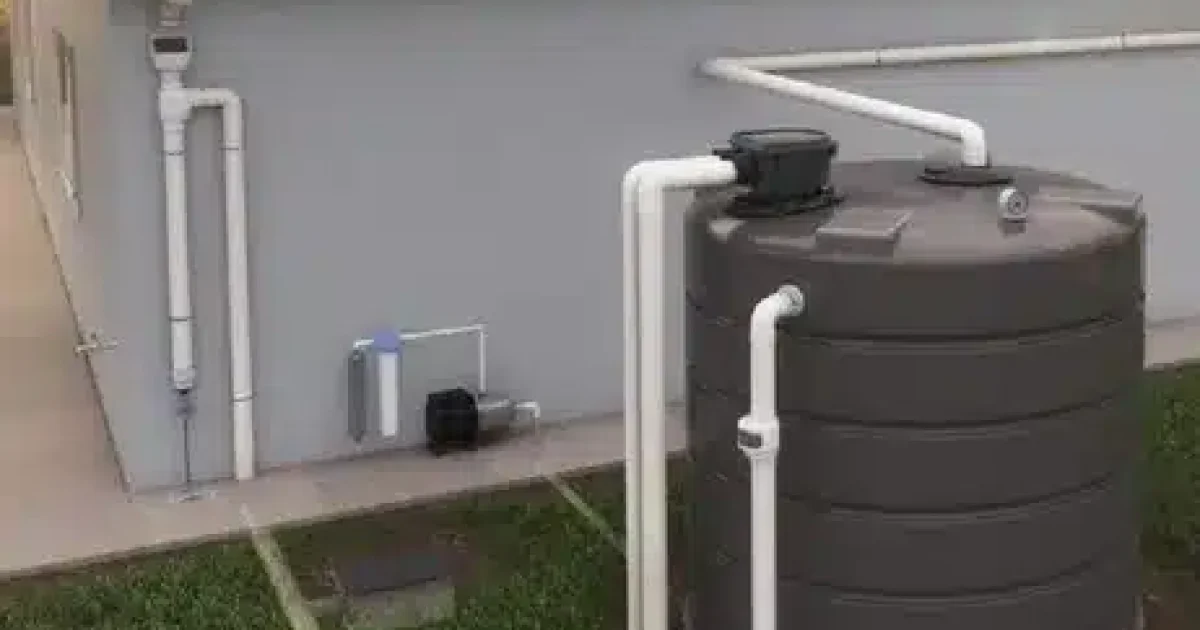
Rainwater harvesting New Zealand is a practical way to make better use of one of our most abundant natural resources. Whether you want to water your garden, reduce mains water use, flush toilets or create a more independent household water supply, a well-designed rainwater harvesting system can make a noticeable difference.
From Auckland and Hamilton to Wellington, Christchurch and regional New Zealand, the right system depends on your rainfall, roof area, available space, household water demand and how you plan to use the collected water.
This guide explains how rainwater harvesting works, what equipment you need, how to choose a rainwater tank, what it can cost, and the important NZ rules to understand before installation.
Rainwater harvesting NZ is the process of collecting rain from a roof or other suitable catchment surface, directing it through gutters and pipes, storing it in a tank and then reusing it when needed.
A basic system usually includes:
The system can be as simple as a small rain barrel for garden watering or as sophisticated as a whole-house rainwater supply.
New Zealand’s Building Performance guidance notes that rainwater can be collected for garden use and can also be used for toilets, laundry and other household purposes when the system is appropriately designed and treated.
Rainwater Harvesting NZ makes sense for many New Zealand properties because rainfall is available throughout much of the country, although the amount and seasonal pattern vary considerably between regions.
For homeowners, some of the biggest benefits include reducing reliance on mains water, having water available for gardens during dry periods and making better use of roof runoff.
Using stored rainwater for gardening, toilet flushing or laundry can reduce the amount of treated mains water your household consumes.
This can be particularly useful for properties with large gardens or homes where outdoor water demand is high.
One of the simplest ways to use harvested rainwater is for irrigation.
A small tank or rain barrel can collect water from a roof downpipe and supply a hose, watering system or garden irrigation setup.
For outdoor use, you may not need a complicated pump system. A suitable tank or barrel can sometimes supply water using gravity.
A stored supply can also be useful when your normal water supply is interrupted.
Even a relatively small rainwater tank will not make a property completely water independent, but it can provide useful water for selected purposes during an emergency.
Capturing roof runoff can also help manage water on your property.
However, every rainwater tank still needs a properly designed overflow. MBIE warns that poorly installed or undersized tanks can overflow and potentially cause damage to your property or neighbouring properties.
The principle is straightforward.
Rain falls onto the roof and flows into the gutters. The water travels through downpipes towards the storage tank. Before entering the tank, debris and the initial dirty runoff should be managed.
The stored water can then be supplied to the garden or, when the system has been properly designed and approved for the intended use, connected to selected household fixtures.
Your roof acts as the main catchment area.
The larger the roof and the more rainfall your property receives, the greater the potential volume of water you can collect.
Roof condition and roofing materials are important, particularly if you intend to use the water for household purposes.
Gutters direct rainwater towards the downpipes.
Keeping gutters clean is important because leaves, moss, dirt and animal debris can quickly enter a collection system.
Leaf screens and gutter guards can help prevent larger material from entering the tank.
They should still be accessible for cleaning and should not interfere with normal roof drainage.
The first rain after a dry period can carry accumulated dust, bird droppings and other contaminants from the roof.
A first flush diverter redirects this initial runoff away from the storage tank.
This is a relatively simple part of a rainwater harvesting system but an important one for improving stored water quality.
The cleaner runoff enters the rainwater tank and is stored until required.
A tank should be covered securely and have suitable screening to prevent insects, birds and other animals from entering.
Depending on the system, harvested water can be used for:
For indoor applications, a pump is generally needed to provide suitable water pressure.
The most important distinction is between non-potable and potable use.
Non-potable water is not intended for drinking.
Garden watering is one of the easiest applications for harvested rainwater.
You can connect a tank to a garden tap, hose or irrigation system and use stored water whenever your plants need it.
Rainwater can be used for toilet flushing when the plumbing system has been designed correctly.
Because toilets do not require drinking-quality water, this can be an effective way to reduce potable water demand.
Rainwater can also be used for washing clothes as part of a properly designed system.
Appropriate filtration and system maintenance are important.
Drinking rainwater requires much more care.
Collected rainwater can contain organic material, animal droppings and contaminants from roofing materials or the surrounding environment. MBIE recommends appropriate treatment or purification before rainwater is used for drinking and other potable household purposes.
If you are planning a potable rainwater system, get professional advice on filtration, disinfection, testing and the applicable local requirements rather than assuming that rainwater is automatically safe to drink.
There is no single best rainwater tank size in NZ.
The right capacity depends on several factors, including your local rainfall, roof catchment area, household size, water demand and whether you have mains water available.
MBIE guidance gives useful broad examples: a roughly 240-litre rain barrel may be suitable for simple garden watering, while indoor rainwater use can require tanks of around 5,000 litres or more. Properties relying entirely on rainwater may need tanks of 30,000 litres or greater.
A smaller tank can work well when your main goal is garden watering.
This option is particularly attractive for urban properties where space is limited.
A 5,000-litre tank can provide a useful amount of stored water for some homes, particularly where rainfall is relatively consistent and mains water remains available as a backup.
Larger tanks are worth considering where household water demand is higher, the property has plenty of roof catchment and seasonal dry periods are more significant.
If rainwater is your property’s primary or only water supply, considerably more storage may be required.
Tank sizing should be based on actual water demand and local climate rather than simply choosing the largest tank that fits the property.
Rainwater harvesting Auckland homeowners often have the advantage of relatively consistent rainfall throughout the year, although seasonal conditions still matter.
Urban properties can face another challenge: limited space.
Slimline rainwater tanks are therefore popular where homeowners want additional storage without giving up a large part of the garden.
Auckland Council has specific planning requirements covering rainwater tank location, height, setbacks and overflow. The exact requirements depend on the property’s zone and other controls.
If you are installing a tank in Auckland, check the current Auckland Council requirements before choosing the tank location.
Wellington properties can also benefit from rainwater collection, particularly for gardens and selected non-potable household uses.
The key considerations are similar: roof catchment, available tank space, local rainfall patterns, household demand and the intended use of the water.
Properties with smaller sections may benefit from vertical or slimline tanks, while larger properties can consider higher-capacity storage.
For rainwater harvesting in Christchurch homeowners, seasonal water demand is an important consideration.
Garden irrigation can create significantly more demand during drier periods, so tank sizing should consider both annual rainfall and when that rainfall occurs.
A system that collects plenty of water in winter may still need sufficient storage to carry the household through periods of lower rainfall.
The same principles apply throughout New Zealand, but the ideal system changes from location to location.
Before buying a tank, consider:
A tank that works well for one property may be too small or unnecessarily large for another.
The rainwater harvesting cost in NZ varies significantly depending on the size and complexity of the system.
A simple outdoor setup can be relatively inexpensive, while a whole-house system may involve substantial costs for the tank, pump, filtration, plumbing, electrical work and installation.
Typical cost factors include:
The tank itself is usually one of the largest individual expenses.
Prices vary according to capacity, material, shape and manufacturer.
New or modified gutters and downpipes may be required to connect the catchment area to the tank.
A pump may be needed when water has to supply indoor fixtures or when adequate pressure cannot be achieved through gravity.
Potable systems require more sophisticated water treatment than simple garden irrigation systems.
Ground preparation, delivery, excavation, plumbing and electrical work can all affect the final price.
Depending on the project, you may also need building consent, professional installation, inspections or other council-related services.
For that reason, it is better to obtain a project-specific quotation than rely on a single nationwide price.
This is one of the most important questions to answer before installation.
The requirements depend on the tank, its location, how it is supported and whether it connects to internal plumbing.
MBIE states that connecting a rainwater system to a home’s plumbing where a mains supply is also present requires building consent, and the mains and rainwater systems must be appropriately isolated using backflow prevention.
A tank may also require consent if it is very large or elevated.
Auckland Council similarly notes that tanks connected to internal plumbing require building consent, while some outdoor-only installations may fall within an exemption depending on their configuration.
Rules can differ between councils and properties.
Before installing a rainwater harvesting system, check with the relevant local authority for your address.
Do not assume that because a small tank does not require consent, a larger tank or an indoor plumbing connection will have the same status.
Overflow is often overlooked when people plan a rainwater collection system.
A tank can fill quickly during heavy rainfall, so the overflow needs to be able to safely handle excess water.
The overflow should be designed so water does not damage the building, foundations, neighbouring property or surrounding ground.
In Auckland, council requirements state that excess tank water must flow back into the property’s existing authorised drainage system in relevant residential situations.
Your plumber, drainage professional or designer can help determine the appropriate overflow arrangement for your property.
It can be made suitable for drinking, but untreated roof-collected rainwater should not automatically be considered drinking water.
Rainwater can pick up contaminants from roofs, gutters, animals, dust and the surrounding environment.
MBIE identifies potential contaminants, including leaves, soil, animal droppings and certain metals, from roofing materials, paint and other components Rainwater Harvesting NZ.
Treatment may involve filtration, UV treatment, chlorination or other suitable purification methods depending on the system Rainwater Harvesting NZ.
If rainwater is intended for drinking, bathing or food preparation, professional advice is strongly recommended.
Rainwater tanks come in different materials and shapes.
Common options include plastic, concrete and coated steel, with fibreglass and other systems also available.
Polyethylene tanks are popular because they are durable, relatively lightweight and available in many sizes.
They can work well for both rural and urban properties Rainwater Harvesting NZ.
Concrete tanks are strong and can be suitable for underground applications.
Because underground installation involves structural and site considerations, professional advice is recommended.
Modern coated steel tanks are available in many shapes and sizes, including options designed for urban sections.
Slimline tanks are useful when side access or garden space is limited.
They can provide significant storage without taking up the footprint of a traditional round tank.
A rainwater tank is not a completely maintenance-free water supply.
Regular maintenance helps protect water quality and keeps the system operating effectively.
Remove leaves, dirt and accumulated debris regularly.
The frequency depends on the surrounding trees and local conditions.
Inspect leaf screens and filters and clean or replace them when necessary.
Blocked filters can restrict water flow and reduce system performance.
Make sure the diverter is working correctly and is not blocked.
Inspect the tank, lid, inlet screen and fittings for damage or contamination.
If your system uses a pump, monitor its operation and have problems investigated promptly.
If you use harvested rainwater as drinking water, regular water testing can provide an important check on water quality. MBIE specifically recommends annual testing for drinking water collected in tanks.
A good system is more than simply putting a tank underneath a downpipe.
A huge tank is not automatically better Rainwater Harvesting NZ.
Calculate how much water you need and compare that with your roof area and local rainfall.
Every tank needs a safe overflow strategy.
Not every roof is suitable for collecting water for every purpose.
If you want potable water, confirm that your roof and collection components are appropriate.
Rainwater and mains water systems must be properly separated to prevent contamination.
This is especially important when rainwater is connected to internal plumbing.
Planning and building requirements can vary by location.
Always check the current requirements that apply to your property before installation.
For many homeowners, yes, Rainwater Harvesting NZ.
The biggest benefit is not necessarily becoming completely independent from the mains supply. For many urban properties, the practical goal is simply to replace some mains water use with collected rainwater.
A small system can supply a garden Rainwater Harvesting NZ.
A medium-sized tank can support irrigation and selected household uses.
A larger, professionally designed system can provide a substantial portion of a property’s water needs.
The best system is the one that matches your property, rainfall, budget and intended water use.
Rainwater harvesting in New Zealand can be a smart investment for homeowners who want to reduce mains water use, improve garden resilience and make better use of roof runoff.
The basic concept is simple, but the details matter.
Start by assessing your roof catchment area and local rainfall. Decide exactly what you want the water for. Then choose an appropriately sized tank, filtration system, pump and overflow arrangement.
If you are planning to connect rainwater to indoor plumbing or use it as drinking water, get professional advice and check the current requirements of your local council.
With the right design and regular maintenance, a rainwater harvesting system can provide a reliable and useful supplementary water source for homes across New Zealand Rainwater Harvesting NZ.
The Rainwater Harvesting NZ amount depends on your roof catchment area, rainfall and collection efficiency. A larger roof can collect substantially more water than a small roof during the same rainfall event.
There is no universal best size. A small tank can be suitable for garden watering, while homes using rainwater indoors may need several thousand litres or more. If rainwater is your only water source, substantially larger storage may be required.
Yes, rainwater can be treated for potable use, but untreated roof-collected rainwater should not automatically be assumed safe to drink. Proper collection, filtration, treatment, maintenance and testing are important.
It depends on the tank and installation. A tank connected to internal plumbing generally requires building consent, while some outdoor-only systems may qualify for an exemption. Auckland also has specific planning requirements for tank location and height Rainwater Harvesting NZ.
Yes. Rainwater can be used for non-potable household applications such as toilet flushing and laundry when the system is appropriately designed and installed in Rainwater Harvesting NZ.