
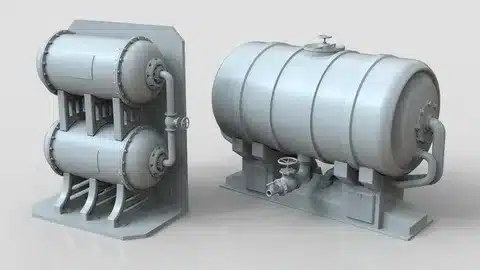
Industrial tanks play a critical role in modern industries by providing safe, efficient, and scalable storage solutions for liquids, gases, and bulk materials. From water storage to chemical containment, industrial tanks are essential for manufacturing, agriculture, energy, and many other sectors.
In this guide, we’ll explore everything you need to know about industrial tanks, including types, materials, applications, and how to choose the right one for your needs.
Industrial tanks are large containers designed to store, process, or transport liquids and gases in industrial environments. These tanks are built to withstand extreme conditions such as high pressure, temperature variations, and chemical exposure.
They are commonly used for:
Choosing the right type of industrial tank depends on your application, storage material, and environmental conditions.
These are the most common industrial tanks used for storing liquids like water, oil, and chemicals.
Examples:
Designed to hold gases or liquids under pressure, these tanks are used in industries like energy and manufacturing.
Key features:
Used in industries such as food processing, pharmaceuticals, and chemicals, mixing tanks allow blending and processing of materials.
These tanks are designed for safe transportation of liquids and gases via trucks, ships, or rail systems.
The durability and performance of industrial tanks depend heavily on the materials used.
Industrial tanks are used across a wide range of industries:
Industrial tank fabrication offers numerous advantages that make them essential for industrial operations:
Designed to store large volumes efficiently.
Built with strong materials to withstand harsh environments.
Available in various sizes, shapes, and materials.
Engineered to meet industry safety standards.
Reduces operational costs through efficient storage solutions.
Selecting the right industrial tank requires careful consideration of several factors:
Different materials require different tank properties (e.g., corrosive vs non-corrosive).
Determine the volume you need to store.
Ensure the tank meets local and international safety standards.
Balance cost with durability and long-term performance.
Proper maintenance ensures longevity and safety:
The industrial tank industry is evolving with new technologies:
Industrial tanks are a cornerstone of modern industry, offering reliable and efficient storage solutions for a wide range of applications. Whether you need tanks for water, chemicals, fuel, or food processing, choosing the right type and material is crucial for safety and performance.
Industrial tanks are used to store liquids, gases, and bulk materials in industries such as oil and gas, agriculture, manufacturing, and wastewater treatment. They are essential for safe storage and efficient operations.
Industrial tanks are commonly made from:
Each material is chosen based on durability, corrosion resistance, and the type of substance being stored.
To choose the right tank, consider:
Yes, industrial tanks can be customised in terms of: