
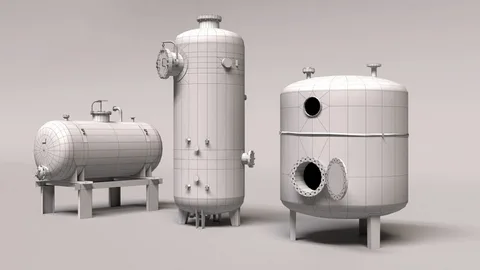
Industrial tanks are large containers designed to store or process bulk materials in commercial and industrial environments. Unlike ordinary storage containers, industrial tanks are engineered to withstand demanding conditions such as chemical exposure, high pressure, extreme temperatures, outdoor weather, heavy loads, and continuous use.
They may be used for temporary storage, long-term storage, blending, heating, cooling, fermentation, settling, separation, or transportation. Industrial tanks depending on the industry, tanks may need to meet strict standards for hygiene, pressure safety, fire resistance, or environmental protection.
Industrial tanks come in many shapes and configurations. Each type is designed for a specific purpose, storage condition, or site requirement.
Storage tanks are among the most widely used industrial tanks. They are designed to hold liquids, gases, powders, or bulk materials until they are needed for production, distribution, or disposal.
Common storage tank applications include:
Storage tanks can be above-ground or underground, depending on space availability, safety requirements, and environmental conditions.
Chemical tanks are built to store acids, alkalis, solvents, fertilisers, cleaning agents, and other reactive substances. These tanks must be compatible with the chemical being stored to prevent corrosion, leaks, contamination, or dangerous reactions.
Chemical tanks often include corrosion-resistant linings, reinforced walls, sealed fittings, venting systems, secondary containment, and special valves. The selected material must match the chemical’s concentration, temperature, and storage duration.
Water tanks are used in industries, farms, commercial buildings, and municipal facilities. They may store potable water, process water, cooling water, fire protection water, rainwater, or wastewater.
Water tanks are commonly used for irrigation, emergency water supply, industrial washing, cooling systems, boiler feedwater, and wastewater treatment. For drinking water applications, food-grade or approved materials are essential.
Industrial tanks are designed to store diesel, gasoline, oil, biofuel, and other petroleum-based liquids. These tanks require careful design because fuels are flammable and can pose environmental risks if leakage occurs.
Fuel tanks may include double-wall construction, leak detection systems, fire-resistant coatings, grounding features, and secure dispensing equipment.
Pressure tanks are built to store liquids or gases under pressure. They are commonly used in compressed air systems, boilers, water pressure systems, chemical processing, and gas storage.
Because pressure tanks operate under internal force, they must be manufactured according to strict engineering and safety standards. Proper inspection and maintenance are essential.
Mixing tanks are used when materials must be blended, dissolved, suspended, or reacted. They often include agitators, mixers, baffles, heating jackets, cooling coils, or control systems in industrial tanks.
Industries that commonly use mixing tanks include food and beverage, cosmetics, pharmaceuticals, chemicals, paint production, and water treatment.
Process tanks are designed for active production steps rather than simple storage. They may be used for heating, cooling, fermenting, reacting, settling, separating, or treating materials.
For example, a food plant may use process tanks for pasteurisation, while a chemical plant may use them for controlled reactions.
Underground industrial tanks are installed below ground level to save space, protect contents from temperature changes, or meet site planning needs. They are commonly used for fuel, water, and wastewater storage.
However, underground tanks require excellent corrosion protection, leak detection, and regular inspection because leaks can be difficult to detect and may contaminate soil or groundwater.
Above-ground tanks are easier to inspect, maintain, repair, and install than underground industrial tanks. They are widely used for water, chemicals, fuel, and raw material storage.
These tanks can be vertical or horizontal and may be placed indoors or outdoors. Outdoor tanks usually need weather resistance, UV protection, insulation, or protective coatings.
The material of an industrial tanks directly affects its durability, safety, maintenance needs, and compatibility with stored products. Choosing the wrong material can shorten tank life and create operational hazards.
Stainless steel tanks are popular in industries that require hygiene, strength, and corrosion resistance. They are widely used in food processing, dairy, brewing, pharmaceuticals, cosmetics, and chemical manufacturing.
Stainless steel offers excellent durability, easy cleaning, resistance to many chemicals, and a smooth surface that helps reduce contamination. It also performs well in high-temperature applications.
Stainless steel tanks are often used for milk, beverages, edible oils, sauces, medicines, cosmetics, purified water, and speciality chemicals.
Carbon steel tanks are strong, cost-effective, and suitable for many heavy-duty storage applications. They are commonly used for fuel, oil, water, and certain chemicals.
However, carbon steel is more prone to corrosion than stainless steel, so it may require coatings, linings, painting, or cathodic protection.
Fibreglass-reinforced plastic, often called FRP, is valued for its corrosion resistance and lightweight structure. FRP tanks are commonly used for chemicals, wastewater, brine, acids, and outdoor storage.
FRP tanks resist many corrosive substances, require less maintenance than some metals, and can be manufactured in large sizes. They are also easier to transport and install compared with many steel tanks.
Polyethylene tanks are commonly used for water, agricultural chemicals, fertilisers, and mild chemical storage. They are lightweight, affordable, and resistant to many substances.
These tanks are often rotationally moulded, which creates a seamless structure that reduces the risk of leakage. UV-stabilised options are available for outdoor use.
Concrete tanks are used for large-volume water storage, wastewater treatment, agriculture, and municipal applications. They are strong and long-lasting when properly designed and maintained.
Concrete is not suitable for every chemical environment, so internal coatings or liners may be required depending on the stored liquid.
Aluminium tanks are lightweight and naturally corrosion-resistant in certain environments. They are often used for transport tanks, speciality storage, and applications where weight reduction matters.
However, aluminium may not be compatible with some chemicals and can be more expensive than basic carbon steel.
Industrial tanks support a wide range of operations across different sectors.
Manufacturing plants use tanks for raw material storage, process liquids, cooling water, chemicals, lubricants, and waste collection. Reliable tank systems help keep production lines running smoothly.
Food-grade tanks are used for milk, juice, beer, wine, sauces, syrups, oils, and other consumable products. Hygiene, cleanability, temperature control, and material safety are major priorities.
Chemical industries depend on specialised tanks for storage, mixing, reactions, neutralisation, and dosing. Chemical compatibility and corrosion resistance are especially important.
Farms use tanks for water, fertilisers, pesticides, molasses, liquid feed, and fuel. Agricultural tanks must be practical, durable, and suited to outdoor environments.
The oil and gas sector uses tanks for crude oil, refined fuels, lubricants, produced water, and process chemicals. These tanks often require fire protection, spill containment, and strict safety controls.
Wastewater plants use tanks for equalisation, settling, aeration, sludge storage, chemical dosing, and treated water holding. Corrosion resistance and easy maintenance are key concerns.
Selecting the best industrial tank requires a clear understanding of your product, process, site, and long-term operating needs.
The first step is to define exactly what the tank will hold. Consider whether the material is water, fuel, food-grade liquid, acid, alkali, solvent, slurry, powder, gas, or wastewater.
Check the material’s chemical composition, concentration, density, temperature, viscosity, flammability, toxicity, and reaction potential. These details help determine the safest tank material and design.
Tank capacity should match your operational needs without creating unnecessary cost or space issues. A tank that is too small may interrupt production, while an oversized tank may waste money and floor space.
Consider current usage, delivery schedules, future expansion, emergency reserve needs, and available installation area.
Material selection should be based on compatibility, durability, hygiene, corrosion resistance, pressure requirements, and budget. For example, stainless steel may be ideal for food or pharmaceutical use, while polyethylene may be suitable for water or mild chemicals.
Indoor and outdoor tanks face different conditions. Outdoor tanks may need UV protection, insulation, wind resistance, weatherproof coatings, or freeze protection. Underground tanks require soil compatibility, corrosion control, and leak detection.
Not every tank is designed for pressure or heat. If your process involves pressurised storage, steam, hot liquids, chilled materials, or temperature cycling, choose a tank engineered for those conditions.
Safety features may include pressure relief valves, emergency vents, overflow protection, level indicators, leak detection, grounding, secondary containment, access ladders, guardrails, and secure manways in industrial tanks.
Easy maintenance reduces downtime and extends tank life. Food, beverage, and pharmaceutical tanks often require sanitary designs with smooth surfaces, clean-in-place systems, and drainable bottoms.
For chemical or wastewater tanks, consider inspection access, sludge removal, coating maintenance, and valve replacement.
Depending on the tank’s use, industry standards or local regulations may apply. Fuel, chemicals, potable water, food products, and pressure vessels often have specific safety, environmental, or hygiene requirements.
Before purchasing, confirm that the tank design, installation, and documentation meet the rules relevant to your location and industry.
Industrial tank businesses sometimes consider used industrial tanks to reduce upfront costs. While this can be practical, it requires careful inspection.
New tanks can be customised to your exact capacity, material, fittings, coatings, and compliance needs. They usually come with warranties and full documentation.
Used tanks may cost less and be available faster. They can be suitable for non-critical applications if they are in good condition and compatible with the intended material.
Inspect the tank for corrosion, cracks, dents, worn coatings, leaks, contamination, missing documentation, and previous chemical exposure. Used tanks should never be purchased based on price alone.
Before placing an order, review these key points:
What material will the tank store?
Is the tank material compatible with the stored product?
What capacity is required?
Industrial tank. Will the tank be installed indoors, outdoors, above ground, or underground?
Does the application require pressure rating or temperature control?
Are special fittings, mixers, vents, sensors, or pumps needed?
Does the tank need insulation, lining, or coating?
Are there hygiene, environmental, or safety standards to meet?
How easy will inspection, cleaning, and maintenance be?
Many tank problems happen because important details are overlooked during selection.
The cheapest tank may become expensive if it fails early, requires frequent repairs, or does not meet compliance requirements.
A tank material that works for one chemical may fail quickly with another. Always verify compatibility before purchase.
Businesses often grow, and storage needs increase. Planning for reasonable future demand can prevent early replacement.
A tank should be easy to inspect, clean, and service. Poor access can increase downtime and labour costs.
Industrial tank for fuels, chemicals, and hazardous liquids, secondary containment can help prevent environmental damage and reduce risk during leaks or spills.
Industrial tanks are essential assets for storage, processing, and material handling across many industries. The right tank improves safety, efficiency, product quality, and long-term reliability. The wrong tank can lead to contamination, corrosion, leaks, downtime, and costly replacement.
When buying an industrial tank, consider the type of material being stored, required capacity, tank construction material, installation location, temperature and pressure conditions, maintenance needs, and applicable standards. Whether you need a stainless steel tank for food processing, a polyethylene tank for water storage, an FRP tank for chemicals, or a carbon steel tank for fuel, the best choice depends on your exact application.
Industrial tanks are used to store, process, mix, heat, cool, or transport liquids, gases, chemicals, water, fuel, food ingredients, wastewater, and other bulk materials. They are commonly used in manufacturing, agriculture, food processing, chemical plants, oil and gas, pharmaceuticals, and wastewater treatment.
The main types of industrial tanks include storage tanks, chemical tanks, water tanks, fuel tanks, pressure tanks, mixing tanks, process tanks, underground tanks, and above-ground tanks. Each type is designed for a specific material, environment, or industrial process.
The best material depends on what the tank will store. Stainless steel is often used for food, beverage, pharmaceutical, and sanitary applications. Carbon steel is common for fuel, oil, and heavy-duty storage. FRP tanks are suitable for many corrosive chemicals, while polyethylene tanks are popular for water, fertilisers, and mild chemicals industrial tank.
To choose the right industrial tank, consider the stored material, tank capacity, chemical compatibility, pressure and temperature requirements, installation location, maintenance needs, safety features, and applicable industry standards. It is also important to think about future storage needs and operating conditions.
Industrial tank above-ground tanks are installed on the surface and are easier to inspect, maintain, and repair. Underground tanks are installed below ground to save space or protect contents from external conditions, but they require stronger leak detection, corrosion protection, and regular inspection.